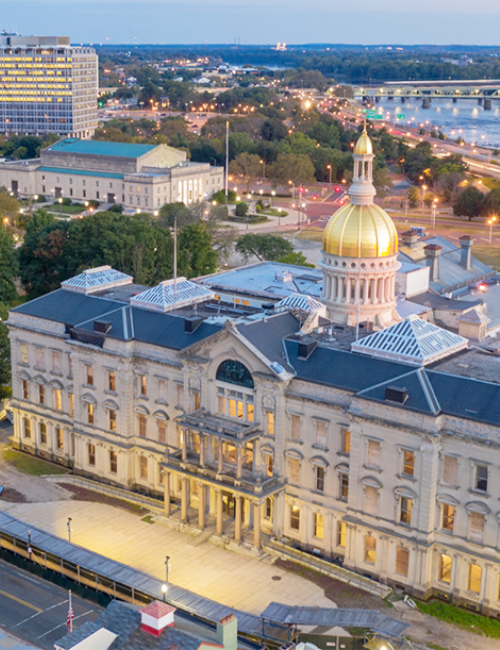
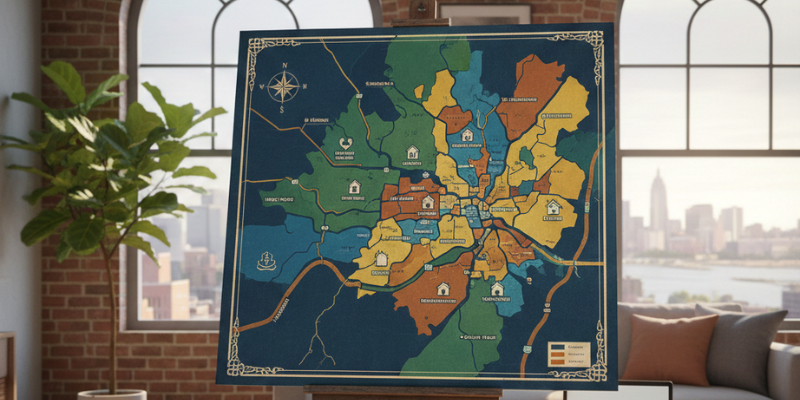
Pull up a neighborhood map of Trenton, and you’ll notice something right away: this is not a city of cookie-cutter subdivisions or freshly paved developments. Trenton is old, layered, and full of neighborhoods that each have their own personality — historic districts with brick rowhomes, quiet pockets of early-20th-century Craftsman houses, lively cultural centers, and plenty of streets where the atmosphere shifts from block to block. Some areas are widely considered safe in Trenton, while others feel very different just a few blocks away. It’s a dense, walkable city in some places, and a leafy residential zone in others. The whole layout tells the story of a capital city that has grown, changed, and reinvented itself for more than 200 years.
The best way to understand Trenton before you start house-hunting is with the city’s official neighborhood map. It outlines all the districts, shows the boundaries of older homeownership zones, and makes it easier to figure out where exactly “Mill Hill” stops or where “Chambersburg” really begins. Because Trenton doesn’t have endless subdivisions with obvious names on big brick entrances, the map is crucial. Trying to navigate Trenton without it is like driving around Dallas with no idea which street goes where—you’ll get lost.
Let’s walk through how the map works, what you’ll actually find when you explore each part of the city, and which neighborhoods fit different lifestyles.
How to Access and Use the Official Trenton Neighborhood Map
Trenton offers a few PDFs and planning maps that break down every district. These aren’t flashy interactive maps with zoning overlays as you might see in rapidly developing suburbs, but the information is clear. You can see which blocks fall into which historic districts, where the main transit lines run, and how close each neighborhood sits to parks, schools, and government buildings.
Combine that map with what you see on real estate platforms, things like price ranges, house sizes, recent sales, and lot layouts — and you’ll get a much clearer picture of Trenton’s overall housing landscape. The maps don’t tell you what houses cost or which streets are getting renovated, but they do help you understand the city’s structure so you can research with purpose.
Most people relocating to Trenton depend on neighborhood maps, a quick drive-through, and online listing photos, since the atmosphere can change from one block to the next. That variety is part of what makes Trenton unique—but it’s also why understanding the map is so important, especially if you’re looking to sell your house fast in Trenton and want to highlight the right location advantages.
Map of Neighborhoods in Trenton, NJ: Full Guide to the City’s Layout and Communities
Trenton doesn’t split into neat north-south-east-west divisions like Mesquite or other suburban cities. Instead, it’s a patchwork of historic neighborhoods, older urban districts, and long-standing residential pockets. If you want to simplify it, you could say the city breaks down into four broad regions: the Historic Core, the Cultural and Urban Districts, the West Trenton Residential Belt, and the Southern and Eastern Neighborhoods. But each of these contains sub-neighborhoods that feel totally different from each other.
Let’s go through them in a way that feels practical and helpful if you’re thinking about living here.
Historic Trenton: Mill Hill, Downtown, and the Central Districts
If you want classic rowhomes, historic charm, and the ability to walk to the train or downtown government buildings, the historic core is where you’ll be looking.
Mill Hill
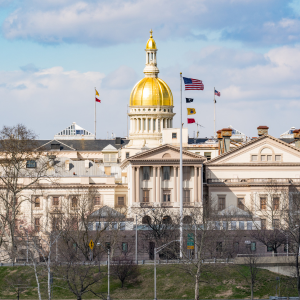
Mill Hill is easily one of the best-known neighborhoods in Trenton and for good reason. The streets are narrow and lined with 19th-century brick homes that look straight out of a movie set. Many houses have restored facades, period-appropriate shutters, and original detailing inside. You’ll find exposed brick, decorative fireplaces, tall ceilings, creaky wood floors, and the kind of craftsmanship that doesn’t exist in new construction.
People living in Mill Hill tend to be community-minded. There are neighborhood events, clean-up days, evening gatherings in the pocket parks, and holiday home tours that draw people from all over Mercer County. Young professionals like it because they can walk to the Trenton Transit Center and head to either New York or Philadelphia without ever starting their car. Longtime residents stay because the homes have character and the neighborhood has a strong identity.
Homes here are generally more expensive than in other parts of Trenton, but still cheaper than anything comparable in surrounding towns like Princeton or Lawrenceville. For the right buyer, Mill Hill offers that rare combo of historic charm, affordability (by regional standards), and walkability.
Downtown and Central West
Walking a few blocks outside Mill Hill and you enter downtown and the Central West area. These neighborhoods are eclectic. Some streets have beautifully maintained rowhouses or twins; others have older homes in need of TLC. Downtown is where the government buildings, cultural venues, and some offices sit, so expect more foot traffic, buses, and daytime activity.
If you like being in the heart of things, this area is appealing. You’ve got old theaters, museums, small cafes, and the kind of urban environment that feels authentic rather than manufactured. It’s not a glossy downtown, but it’s real, historic, and always evolving. Housing varies widely in condition and price, making it one of the most unpredictable but also potentially rewarding places to buy.
Cultural Trenton: Chambersburg and the Surrounding Districts
Chambersburg (“The Burg”)
Chambersburg is the city’s longtime cultural hub. It used to be heavily Italian, many locals still remember The Burg as the place to go for old-school Italian restaurants and social clubs — but today it’s a vibrant Latino district full of bakeries, restaurants, markets, street festivals, and multi-generational families.
The food alone makes this one of the best neighborhoods in the entire city. On weekends, the streets get busy with people heading to restaurants or events. It’s lively, warm, and community-driven. It’s also one of the most affordable places to buy a home. Most properties are rowhouses or multi-family buildings, which makes the neighborhood popular among investors and first-time buyers who want more house for their budget.
Like any older urban area, the condition of properties varies widely. But it’s also one of the neighborhoods where you feel the most culture and energy.
West Trenton: Cadwalader Heights, Hiltonia, and Glen Afton
If you imagine Trenton only as rowhouses and tight city blocks, the west side neighborhoods will completely change your mind. This part of the city looks and feels like a quiet suburb tucked inside an urban environment.
Cadwalader Heights
Cadwalader Heights is a standout neighborhood because it sits right next to Trenton’s largest and most iconic green space: Cadwalader Park. The park was designed by Frederick Law Olmsted, the same designer behind Central Park, so you get that classic rolling-lawn, shaded-path kind of environment that immediately makes everything feel calmer.
The homes in Cadwalader Heights are large early-1900s houses with deep front porches, gables, dormers, and big windows. It’s the type of neighborhood where people walk their dogs, wave at neighbors, and spend afternoons on the porch. You don’t feel like you’re in a capital city when you’re here. You feel like you’re in an old, charming town that just happens to be five minutes from downtown.
Hiltonia and Glen Afton
Go a bit farther west, and you enter Hiltonia and Glen Afton — two more residential neighborhoods with a very suburban feel. These are the places where you find well-maintained single-family homes, leafy streets, and neighbors who have lived in the area for 20, 30, 40 years. The houses come in a variety of styles: Colonial, Tudor Revival, mid-century, Cape Cod, and everything in between.
Because these areas are more suburban, they tend to attract older buyers, families looking for quiet streets, or anyone who wants a backyard and less density.
South Trenton, Wilbur, and The Island: Urban Living and Affordability
The Island
The Island sounds exotic, but it’s just the name of a residential pocket near the Delaware River. The homes tend to be early-20th-century singles and twins with small yards and tree-lined streets. It’s a stable, pleasant area that feels tucked away even though it’s not far from downtown. People who live here appreciate the quiet and the traditional architecture.
South Trenton
South Trenton is one of the city’s most densely populated and historic sections. Homes are generally older rowhouses, small twins, and brick facades with character. It’s one of the most affordable areas of the city and attracts both first-time buyers and investors. Some parts are vibrant and active; others are calmer residential blocks. Like many older urban areas, it can change from block to block.
Wilbur
Wilbur sits just northeast of downtown and offers another affordable entry point into the housing market. Homes are usually compact rowhouses or twins, many with that classic early-20th-century Trenton brick look. Buyers who want something under the regional market average but still close to the city’s core often consider this neighborhood.
Housing Market and Affordability Across Trenton Neighborhoods
Trenton is one of the most affordable cities in New Jersey, especially compared to nearby towns where single-family homes can easily top half a million dollars. In Trenton, depending on the neighborhood, a typical home might fall somewhere between the low $200Ks and mid $300Ks, with the historic districts and west side neighborhoods sitting at the upper end of that range.
Mill Hill, Cadwalader Heights, Hiltonia, and Glen Afton tend to command higher prices because the homes have more character, larger lots, and better-maintained streets. They also attract buyers who want stability and aesthetics over the lowest possible price.
Chambersburg, South Trenton, and Wilbur are where buyers looking for affordability go first. These are the neighborhoods where you can still find multi-family homes or single-family rowhouses well below the regional average. It’s also where investors look for long-term rental opportunities.
Overall, Trenton gives you more square footage for your money than almost any city in central New Jersey, which is one of the reason buyers who work in Princeton, Hamilton, or even Philadelphia consider it.
Schools, Amenities, Commutes, and Lifestyle

Trenton’s school system is an important factor for families. The district includes a range of elementary and middle schools, plus Trenton Central High School, which was recently rebuilt. Many families consider specific schools rather than the district as a whole. Others look into charter or magnet-style programs. And because the city is so central, some residents choose private schools or schools in surrounding towns if they have the means.
The lifestyle in Trenton shifts drastically depending on which neighborhood you’re in. In Mill Hill and Downtown, you’ve got walkability, historic architecture, and immediate access to the train. Chambersburg gives you cultural energy, festivals, and some of the best food in the region. Cadwalader Heights and Hiltonia provide that quiet, shaded, suburban calm. South Trenton and Wilbur offer affordability and the kind of urban density that comes with living in a historic Northeastern city.
One of Trenton’s greatest advantages is its transportation network, which makes getting around New Jersey and beyond incredibly convenient. The Trenton Transit Center serves as a major hub for NJ Transit, Amtrak, and SEPTA, offering direct train access to New York City, Philadelphia, and even Washington, DC—perfect for commuters or anyone who prefers not to drive. In addition, major highways such as Route 1, Route 29, I-295, and I-195 surround the city, making it easy to reach nearly anywhere in the state within an hour. With this level of accessibility, it’s no surprise that we buy houses in New Jersey, especially in well-connected areas like Trenton.
Choosing the Right Trenton Neighborhood for Your Lifestyle
Trenton draws a surprisingly diverse mix of people: state employees, artists, young professionals, families, retirees, longtime residents, and newcomers from all over the world. As a result, the choice of neighborhood has more to do with lifestyle preference than demographics.
- If you want history, charm, and walkability, go for Mill Hill.
- If you want huge trees, large historic homes, and a peaceful environment, head to Cadwalader Heights or Hiltonia.
- If you want culture, amazing food, and affordability, Chambersburg is unbeatable.
- If you want the lowest price point and classic urban living, look at South Trenton or Wilbur.
- If you want something tucked away but still central, consider The Island.
Trenton is not a city where every neighborhood feels the same. That’s exactly why exploring the map matters so much.
Key Takeaways: Trenton Neighborhood Map 2025
Trenton is a city of unique neighborhoods, each offering its own character — from the historic brick charm of Mill Hill, to the quiet, leafy streets of Hiltonia, to the cultural energy of Chambersburg. As you explore the city, the official neighborhood map is a helpful starting point for understanding where everything fits, whether you’re planning to tour homes or considering your options. For homeowners looking for a faster, simpler solution, Better Cash Buyer buys houses for cash, making it easy to move forward — call us today.
Helpful Trenton Blog Articles
- Paperwork For Selling Your House By Owner In Trenton, NJ
- Selling A House With A Lien In Trenton, NJ
- Selling A Foreclosed House In Trenton, NJ
- Closing Costs Without A Realtor In Trenton, NJ
- Selling Your Trenton, NJ, Home As-Is
- Is Trenton, NJ, a Good Place to Live?
- Trenton, NJ Neighborhood Map
- Trenton, NJ Capital Gains Tax Calculator
- Best Things to Do in Trenton, NJ, With Kids
- Trenton, NJ, Property Managers
- Trenton, NJ, Property Tax Rate
- Fun Facts About Trenton, NJ
- Trenton, NJ Cost of Living
- Is Trenton, NJ, Safe?